← back to projects

Strategic design · Systems · Storytelling
Designing an equitable future in low Earth orbit
A 15-week strategy project with NASA, through Parsons, on a deceptively simple question: how do you get people to care about space research they already rely on every day? My piece was a prototype that makes that dependence impossible to ignore.
- Strategy
- Systems
- Storytelling
The ISS is ending. The story is just beginning.
The International Space Station retires in 2030. After 25 years of continuous human presence in orbit, the lab quietly behind cancer detection, weather forecasting, and food preservation is being decommissioned.
NASA came to Parsons with a challenge that wasn't scientific, it was strategic: how do you build public investment in something most people don't realize they already depend on?
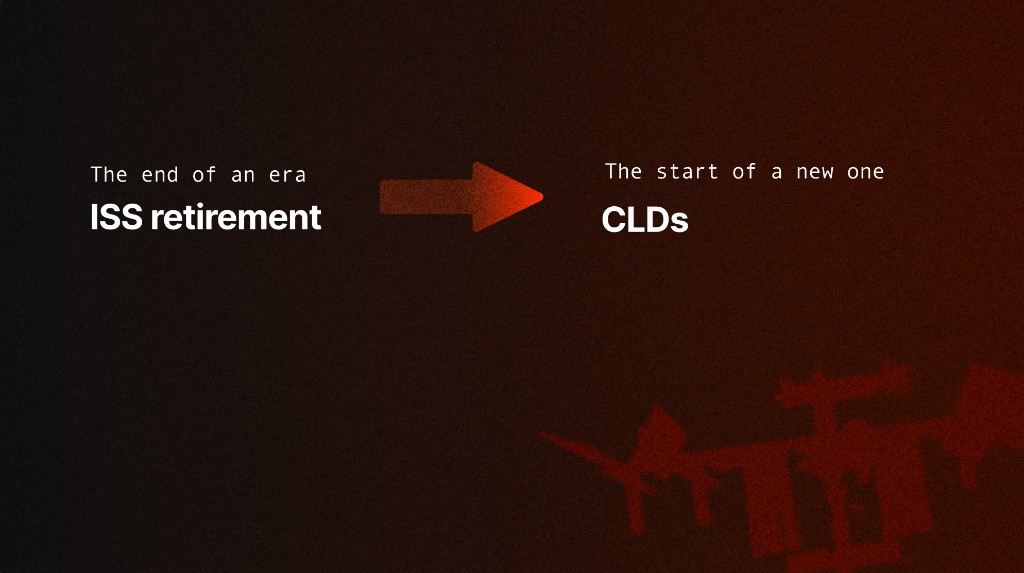
Space is everywhere in our lives, and invisible in our story.
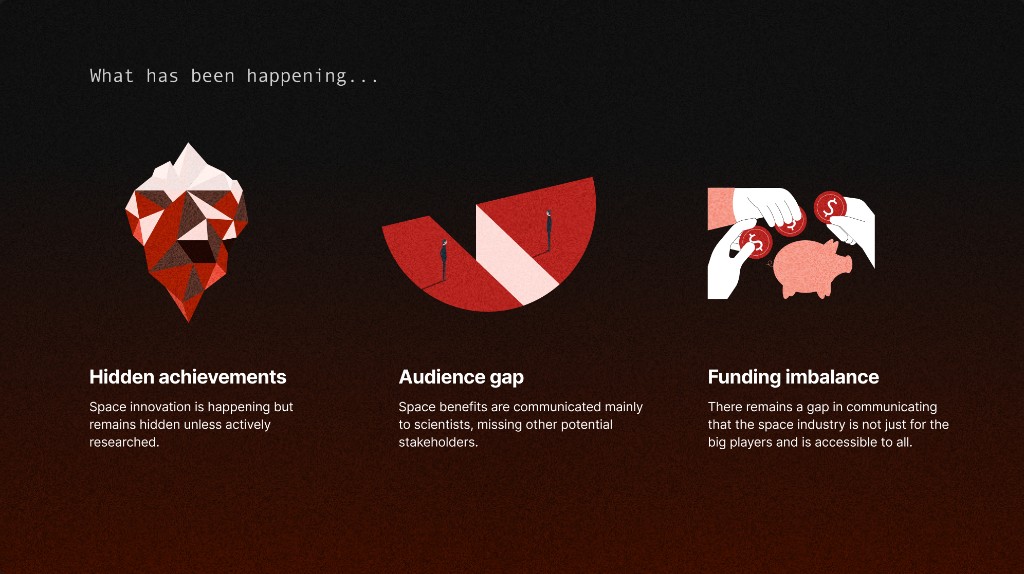
Digging in, we kept landing on the same insight: the benefits of space research are widely distributed, but the narrative is narrowly communicated. The conversation lives inside scientific and policy circles, so the public stays disconnected, achievements stay hidden, whole audiences get missed, and funding feels like it's only for the big players.
That reframed the question for us: how might the next era of low Earth orbit be equitable, participatory, and genuinely supported by the people it serves?
Turning an overwhelming problem into something actionable.
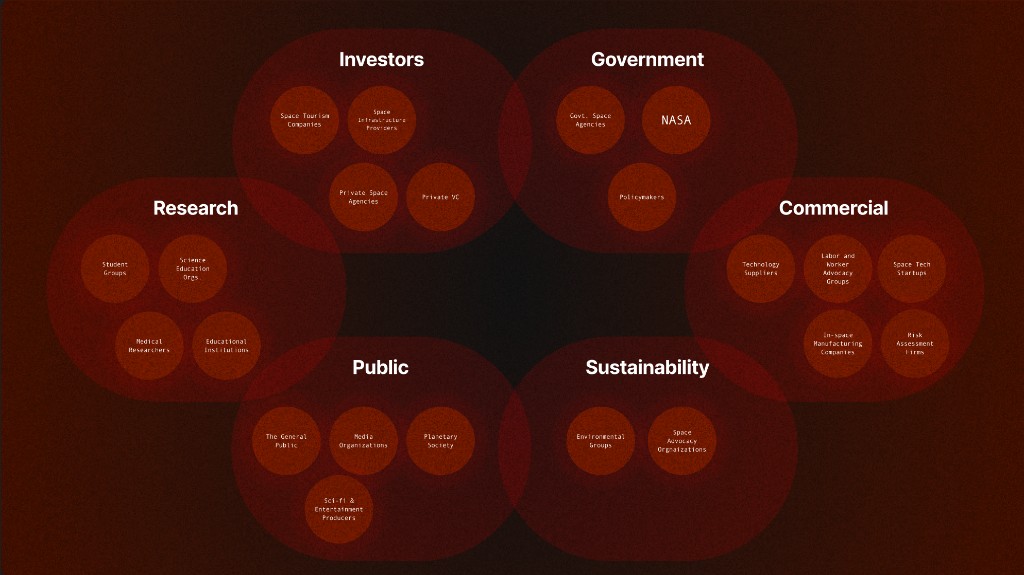
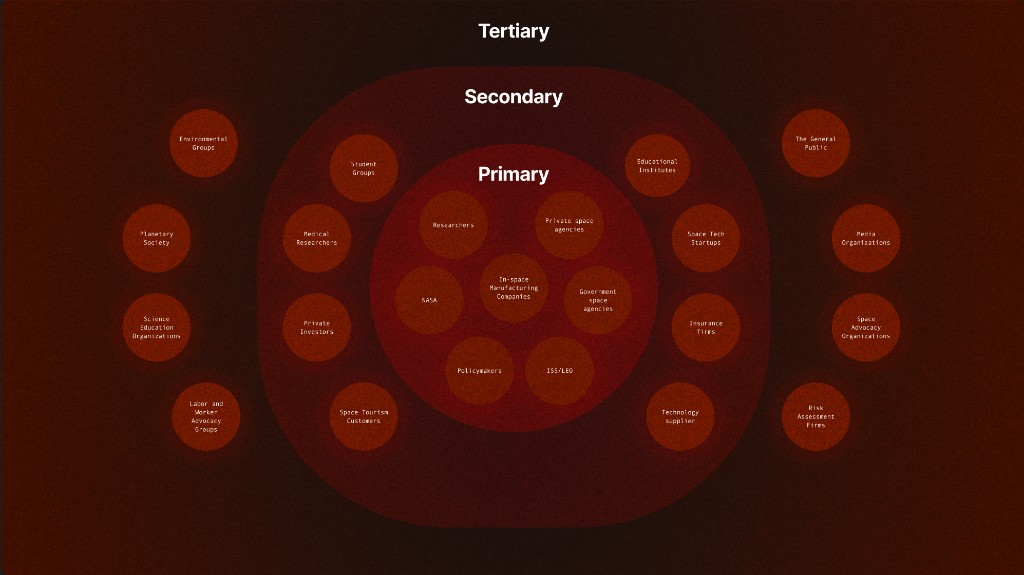
We broke the opportunity into six strategic domains, public engagement, commercial activity, governance, scientific research, financing, and space sustainability, then mapped the full constellation of people who shape and are shaped by space: the space industry, educators, students, creative professionals, impact-driven institutions, and communities historically left out of science and policy.
From there we laid a three-stage roadmap, Prepare to Launch (build the storytelling infrastructure now, before the 2030 window narrows), Lift Off (scale engagement and deepen participation), and In Orbit (codify an equitable governance model that keeps space science accountable to people, not just funding bodies).
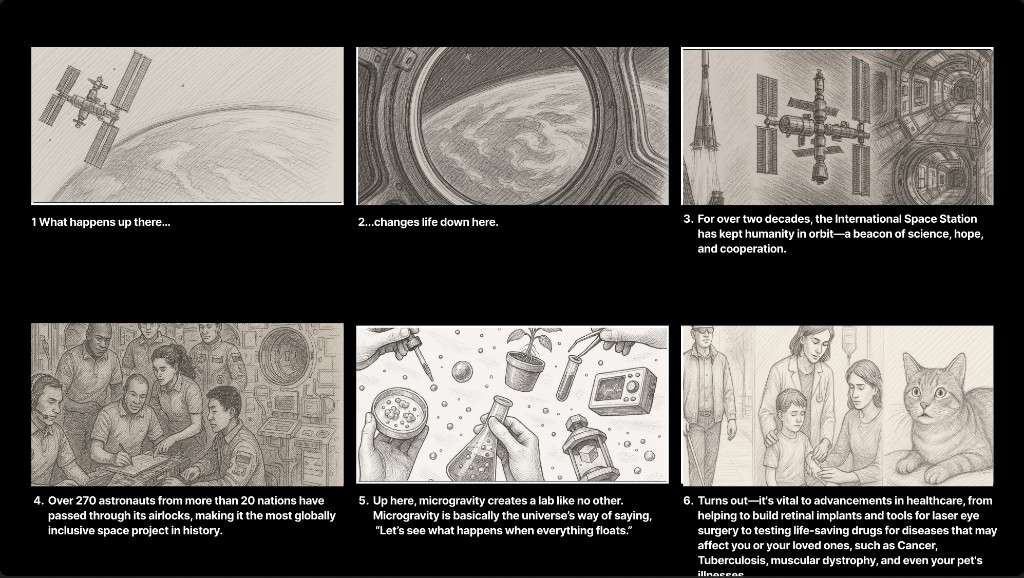
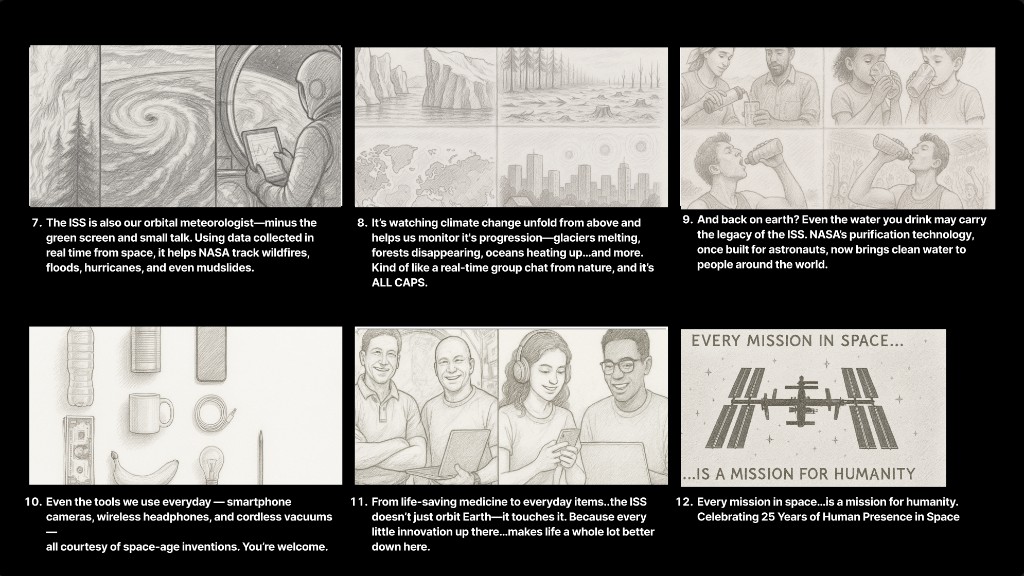
My prototype: A Day in Life Without NASA
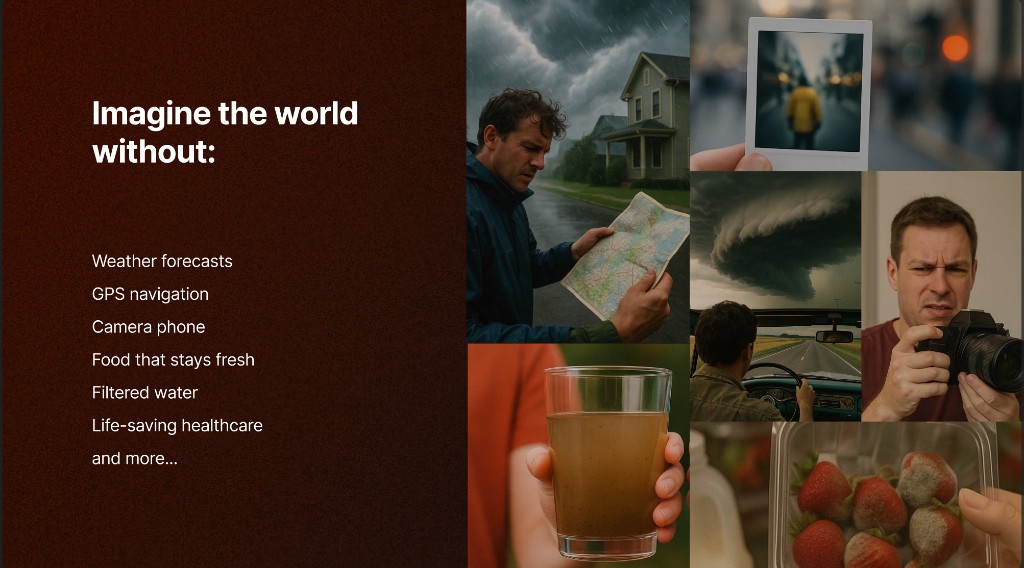
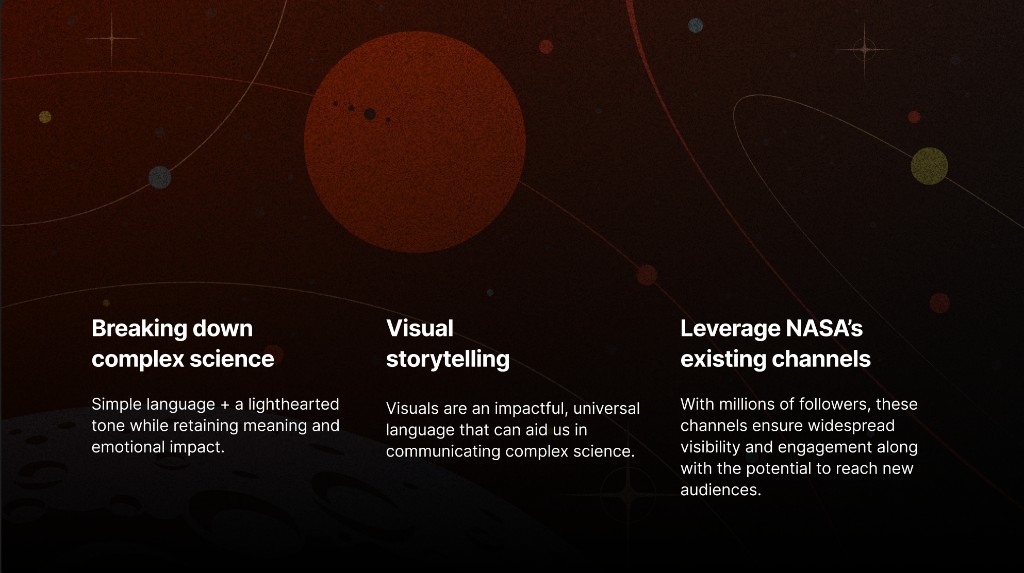
My piece of the project was a counterfactual experience, timed to NASA's 25th anniversary of continuous human presence in space. It walks you through an ordinary day as if ISS research had never happened: the cancer screening, the weather alert, the food-safety standard, all gone.
The point isn't data, it's the small shock of recognition. Loss turns out to be far more mobilizing than statistics, and that emotional turn is what makes people lean in and actually care.
Learn more
A capstone collaboration between Parsons School of Design and NASA's ISS program. NASA →